
Genuine Curiosity

Author Dwayne Melancon is always on the lookout for new things to learn. An ecclectic collection of postings on personal productivity, travel, good books, gadgets, leadership & management, and many other things.


Moving forward along the Gulf Coast

My family and I just returned from a great trip back home for Christmas. My wife and I both grew up in Louisiana, and were a bit anxious about what we'd find back home after all the nasty stuff on TV about New Orleans and its post-Katrina, post-Rita craziness and despair.

The news is still bad down there...
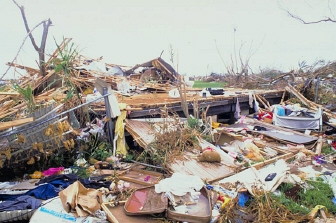
Make no mistake about it - things are still bad back home. People in New Orleans are still without power and basic infrastructure in lots of areas. They are still living in campers and tents on their front lawns because they can't get into their mold-tainted, toxic houses. They're still finding bodies fairly regularly.

We visited my friend Paul last week while we were in Louisiana and got lots of first-hand reports. He knows families in his area that have an extra dozen or so people living with them because they have no place to go, no place to work, etc.

Paul maintains a blog -- check it out for some unvarnished, local perspective on what's happening in Louisiana.

And it's not just New Orleans - the bad news spreads across a huge portion of the Gulf Coast.

...but it's not all bad

But the news is not all bad. People are bouncing back and they are doing a lot to help each other. Christmas toy drives were going strong down there, people were giving like crazy to the local charities (and the national charities that help local people, like the Salvation Army), and churches and local service organizations are pitching in all over the place. In general, people are doing what they can to help each other regardless of race, religion, or whatever.

And it's not just New Orleans - the good news spreads across a huge portion of the Gulf Coast.

They sincerely appreciate the help they are getting

By the way - food, money, and other types of aid are still coming from all over the place. Up here in the greater Portland, Oregon area I've learned about (and participated in) all kinds of grass root projects to gather useful items and send them down south to people that need some help right now. And it's not going unnoticed down there, even though CNN seems to have moved on.

The people in Louisiana who are getting help from strangers around the world appreciate it very much. Really. So, even though the news coverage has died down a lot and is focusing on politics, the blame game, etc. -- there are a lot of people across the Gulf Coast who can use any extra prayers, charity, and good works we can spare.

If you're looking to drop in a last-minute donation while there is still time to take advantage of it on your 2005 taxes, check out my earlier post about how to make sure you're giving to a reputable, efficient charity and not a bunch of con artists.

Related Posts:


By the way - for those of you who like data, I read an interesting article from Knight Ridder's news service today about the myths and realities of who was affected in New Orleans. It talks about how the death statistics just release are inconsistent with claims we've been hearing that Katrina's death toll was racially biased against minorities. Turns out, it was actually older people who died in disproportionately high numbers. Maybe Kanye West will start saying "George Bush hates old people," now.

Read More

What if the world slept polyphasically?

I recently followed Steve Pavlina's journey into a polyphasic sleep routine, and have found myself wondering what it'd be like if a majority of the world operated in this way. He just posted his "60 day update" on polyphasic sleep, raving about the productivity gains he's seen.

In case you haven't followed Steve's experiement, he describes polyphasic sleep this way:

"Polyphasic sleep involves taking multiple short sleep periods throughout the day instead of getting all your sleep in one long chunk. A popular form of polyphasic sleep, the Uberman sleep schedule, suggests that you sleep 20-30 minutes six times per day, with equally spaced naps every 4 hours around the clock. This means you're only sleeping 2-3 hours per day."

I have been thinking about some of the implications, were this ever to catch on across the majority of the world:

  • Would we change the length of our work days? What about the school day?
    • Maybe we could spread out the congestion of "rush hour" by having staggered shifts around the clock?
  • Would all business begin staying open 24 hours?
  • Would this create more jobs, or just create the expectation that we should do more at our current jobs?
  • Would we all consume more?
    • We'd leave our lights on a lot more (at home and at work)
    • We probably wouldn't turn down our heat at night during the winter
    • We'd probably drive more
    • We'd be awake more and eat more
  • Would the hotel and leisure industry change? How?
  • When would they play those infomercials on TV?
  • Would bars and restaurants change how they operate?
    • After all, when would it be "time for breakfast?"
  • Would we still get jet lag?
  • Would our joints and organs wear out faster because we'd make them work more?
  • Would we get sick more or less often?
  • Would the murder rate (or crime in general) go up or down?
    • If more people were awake for more of the time, and you didn't have everyone away from their neighborhoods at the same time every day, what would that do to crimes of opportunity?
  • What about the suicide rate?
  • When someone said they needed to "sleep on it" would they really be ready to answer about 15 minutes later?

And I could go on, of course. This is fun and intriguing to think about, but I don't think the majority of the world will every sleep polyphasically. A few years ago, I heard claims that the "Atkins diet" would cause all kind of negative impacts on the market for sugar, potatoes, corn, and all kinds of things like that. Of course, that didn't happen - and I think polyphasic sleep is much less of a phenomenon than Atkins was.

Sometimes, I consider doing the polyphasic sleep thing and have even discussed it with my wife. She is also intrigued by it, especially after hearing some of Steve's stories about how much more he is getting done with all of his extra time.

At the end of it, my wife usually says, "Wait until Steve's done it for about 6 months to see if he has some big problem." And then there's the fact that on cold winter mornings like this morning. As I reached over, hit snooze, retreated back into my warm, comfy bed, I decided I'll just consider it a bit longer.

Read More

The dark side of wikis

A couple of articles have come my way this week, which highlight one of the challenges of open information sharing: people sometimes lie. The articles I've read are about a false bit of "history" created on Wikipedia, defaming a gentleman that used to work for Bobby Kennedy.

If you know your source is subject to subversion, you can look for third party verification - but people want to trust things like Wikipedia because they very good, and they make research much easier. Encouragingly, my 12-year-old's school is educating their students on the cautions of using Wikipedia as a reference source. In fact, the first I heard about this Wikipedia false history incident was from them via email. This, from the school librarian:

Wikipedia, an online "encyclopedia," is being used heavily by students. They need to be aware that it is not always accurate. Here is an example: http://www.usatoday.com/news/opinion/editorials/2005-11-29-wikipedia-edit_x.htm 

My solution: use it if you must but verify the information in at least two other sources that have established reputations for providing reliable information. That might mean looking in a book!

My daily CNet News.com alert contained a perspective piece on "Wikipedia and the nature of truth," which offers additional perspective on the article above.

Lying is nothing new, of course. But access to lies gets easier with the internet.

When people lie in a credible venue, how long can the venue remain credible? It depends on whether you take action to rectify the lie, and implement controls to reduce the possibility that future lies will be tolerated.

One solution is to use some kind of verification process to assure you of the credibility of the source. Professional research organizations and commercial encyclopedias ostensibly have fact checkers to vet this out.

I'm not sure if Wikipedia's structure allows a fact checking process, or if it simply relies on peer review and "let us know if you see something wrong" vigilance. That's fine, but it seems there should be some sort of authentication for content providers, at minimum, so we could avoid the "we don't really know who made this false claim" situation outlined in the USA Today piece. I think that's reasonable for a resource like Wikipedia, which is emerging as an authoritative reference source.

What do you think?

Related Posts:

Read More

Knowing vs. doing - Where is the value?

I just read the second installment of a 3-part series on EM Sky's Win-Win Web. She is talking about the house her father (and a couple of guys named Herman and Louie) built. She grew up there, but the world has moved on since then and now someone else owns it and is remodeling it. Go read it - she has some powerful thoughts on what this change means to her.

Handscrew_1 In today's post (part 2) she talks about how easy it has become to discard the blood and sweat that goes into creating things of value. She says, "We measure the value of the things we buy through the price we pay for them. And we forget to be grateful for the labor of others because we already paid them in cash. Money becomes the extent of every exchange, and relationship is forgotten."

I think there is another aspect of today's society that contributes to our disposable view of the world. We're getting very good at efficiency over individuality these days. Cram a bunch of kids through a one-size-fits-all educational system (and no, I'm not blaming the teachers) and program them in a cost-effective way.

Once upon a time, people learned by doing. There were apprenticeships, hands-on training, and lots of *creating* things to learn how to create them better.

Today, people (yes, I'm one of them) learn about things they'll never see or do, and become "experts" on places and people they'll never see. We buy things we could never make on our own, made by people we'll never meet or get to know. It makes our lives a lot easier, but it also makes the lives of the anonymous "thing makers" - and the things they make - less valuable. How much of the furniture in your house will last for 200 years? Unfortunately, not much of mine. Heck, I don't think my house itself will last that long.

What's the answer? I don't know. But I'm encouraged that the internet doesn't just make it easier for us to buy the cheapest commodities at the lowest prices. It also makes it easier for us to reach the unique offerings of today's artisans that live beyond the bounds of our villages. Yes, there are still people out there who make things by hand and put a bit of themselves in each thing they make.

Here are but a few examples:

And I could go on... All of this is just a Google (or Yahoo! or MSN...) search away. Sure, you might pay a bit more, but I think the unique value is worth it for some things. The nature of our world is changing; we need to make sure that value and relationships don't become things of the past.

Read More

Kind words and a warm place to sleep

During a recent hotel stay, I found a laminated card on my pillow at an Embassy Suites outside Kansas City. I made a copy of it and carry it with me now, since I love the sentiment. It made me feel better about my stay at the hotel, and I'd like to share it with you.

To Our Guests
In ancient times there was a prayer for
"The Stranger Within Our Gates"

Because this hotel is a human institution to serve people, and not solely a money making organization, we hope that God will grant you peace and rest while you are under our roof.

May this suite and hotel be your "second" home. May those you love be near you in thoughts and dreams. Even though we may not get to know you, we hope that you will be conformable and happy as if you were in your own house.

May the business that brought you our way prosper. May every call you make and every message you receive add to your joy. When you leave, may your journey be safe.

We are all travelers. From "birth 'til death" we travel between eternities. May these days be pleasant for you, profitable for society, helpful for those you meet, and a joy to those who know and love you best.

Read More