Genuine Curiosity

Author Dwayne Melancon is always on the lookout for new things to learn. An ecclectic collection of postings on personal productivity, travel, good books, gadgets, leadership & management, and many other things.


[Review] Remarkable Leadership

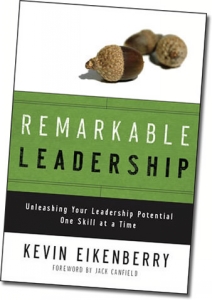
As I mentioned a couple of weeks ago in my post about New Year's resolutions, I've been reading Kevin Eikenberry's book, "Remarkable Leadership: Unleashing Your Leadership Potential One Skill at a Time." The book opens with the question, "Are leaders made or born?" - and Kevin provides the answer: Leaders are made.
Sure, we all know people who seem to be "born leaders" and make it look easy, but the premise of this book is that remarkable leaders learn many of the things that make them remarkable. I agree with that premise - I know people with great charisma, brilliant ideas, and other things traditionally associated with great leaders. But I've known some great leaders, and their leadership goes beyond charisma and great ideas. Remarkable leadership is about what leaders do day in, day out - and how they learn from their interactions with others.

This book feels like an "on demand mentor" for developing your skills as a leader.

What do you need?

Eikenberry provides a bunch of "modules" in this book, each focused on analyzing and developing a narrow facet of leadership. In addition to background and case studies he provides a bunch of little self-assessments to get you to think about what you really need to be a better leader. I found these assessment questions to be very focusing, and they helped me decide which chapters I needed most.

Why not just read the whole book? Sure - you can (and you probably should). But another cool thing I found in this book is a description of 3 other ways to use the book:

  1. Start with a quick read, and then decide where to focus.
  2. Browse quickly, then decide where to start.
  3. Start with the skill you are most interested in.

In the first two options, the self-assessments are excellent tools to guide your choices (for the third, I guess you could use the table of contents).

Read More
Will you still need me, will you still feed me...

I just finished John Izzo's book, "The Five Secrets You Must Discover Before You Die" and I think it's a good choice to provide some perspective for New Year's resolutions.

This book contains a very interesting collections of anecdotes and insights from hundreds of interviews Izzo has conducted with "elders" in various cultures around the world (ages ranged from 59 to 105). He distilled what he learned from these interviews into the "Five Secrets" that these elders deemed essential to a happy life. For those of you who crave the list, the five secrets are:

  1. Be true to yourself
  2. Leave no regrets
  3. Become love
  4. Live the moment
  5. Give more than you take

A simple list of the Five Secrets is useful, but the "why" really comes out in the stories Izzo shares in this book. I learned a lot of subtleties about the five secrets through the stories in each section.

Powerful perspective from others - and some questions of my own

Izzo went down the path toward this book because he wanted to learn how to have the most fulfiling life possible. His father died at age 36, and Izzo's sense of urgency about his own life increased as a result. This study process got him to spend a lot of time with old people and he found that different cultures place different amounts of value on the old in their societies. Izzo found many cultures where the elders are held in very high regard, and regularly consulted about weighty matters - for example, he cites a Romanian saying, "The house that does not have an old person in it must buy one."

He also observes that the US culture, for one, tends to focus more on the ideas of the young, and relegates elders to nursing homes and retirement communities. I think his observation is an interesting one and, while his statements about this may be exaggerated a bit, it's worth considering whether we are systematically dismissing the value of the old people in our society - and figuring out how each of us, individually, can embrace the value of our elders more often.

As cool as Izzo's ideas are, one thing bothered me after reading this book: Most of the "elder honoring" cultures Izzo mentions (Romania, Tanzania, etc.) are not exactly dominating the world's stage for political, economic, or social contributions. Why not? What else is needed? And is there a way to accelerate world contributions by better engaging elders in our activities and decisions?

Start the New Year with some new ideas

There is a lot to think about in this book, and I think it provides an excellent backdrop for reviewing your life's priorities and purpose. If you're thinking about New Year's resolutions this would be a good book to read before you put pen to paper - it's an easy read for such a deep message, and the stories will be good for you no matter what..

Read More

[Review] Fired Up or Burned Out

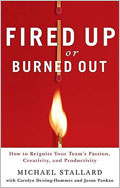
It's been a good year for good business books. I just finished Michael Stallard's Fired Up or Burned Out: How to Reignite Your Team's Passion, Creativity, and Productivity, and liked it very much.

The concepts in this book are sound, but the reason I liked it so much is that it contains a lot of stories that help illustrate how the concepts work in real life. For example, one of the concepts discussed in this book is about how to establish and maintain "Connection" in the workplace.

Great coaching

Stallard goes on to tell the story of John Wooden, a basketball coach, and how Wooden fostered a sense of family and commitment within his basketball teams (it's a great story) and went on to become one of the great basketball coaches of the game. Wooden coached some truly great players like Bill Walton and Kareem Abdul-Jabbar during their college years, and made quite an impact. For example, Abdul-Jabbar wrote of Coach Wooden:

"[He] had a profound influence on me as an athlete, but even greater influence on me as a human being. He is responsible, in part, for the person I am today."

The foundation of Wooden's philosophy was to bring together Values, Vision, and Voice and the impact was extremely powerful. He fostered Connection in everyone on the team - not just the stars, and believed in dealing with issues, challenges, fears and disagreements out in the open. I can't do the story justice here, but it's an inspiring example of connecting individuals into a powerful team.

Not-so-great coaching

Stallard follows this with the story of Howell Raines of the New York Times, who had a disastrous reign due to politics, favoritism, and inconsistent application of policies and values. He fostered Connection in the stars of the organization, but alienated everyone else.

Read More

Renegades Rule

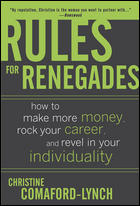
I've been on a traveling spree lately and, while it hasn't provided me with much time to post here, it has given me the chance to catch up on some of my reading. One of the books that I read is Christine Comaford-Lynch's "Rules for Renegades: How to Make More Money, Rock Your Career, and Revel in Your Individuality." I was familiar with Christine from back in the late 20th century when she was a columnist for computer magazines (that's my industry). I've always thought she was very smart.

I bought the book because I wanted to find out how Christine --who never finished high school-- became a major "name" in the software industry and fostered multiple successful business ventures and made some high-powered friends along the way. I found an enjoyable read, with some fun stories and some good, reusable tips.

In some ways, this book reminds me (at least a bit) of Tim Ferriss's "Four-Hour Workweek" because Christine takes some of the same approaches for gaining advantages by understanding the loopholes and technicalities that let you "put one over on the system." By doing this, she was able to be a player in the early days of Microsoft, get job interviews (and get hired) for jobs she probably wouldn't have otherwise even gotten invited to interview for, and many other impressive things.

In this book, you're taken through a journey of discovery which led Christine to 10 Rules for renegades. My favorites:

Rule 1: Everything's an Illusion, So Pick One That's Empowering

This is a variation on "fake it 'til you make it" or, as I always say: "take responsibility for your own well-being." Essentially, this is a primer about how to anchor your focus and beliefs in a way that always helps you move toward something better. Christine shares a quick & dirty technique for setting, focusing on (then adjusting and resetting) compelling goals in key areas of your life.

Rule 6: Learn to Love Networking

OK, so some people love to network. Some don't. I am not a natural networker and couldn't learn to love it until I wrapped it up in a set of tricks and techniques to make it more fun. IIn this Rule, I found some great tips in "Essentials for Networking," and these didn't feel like they required superhuman stamina like Keith Ferrazzi's in "Never Eat Alone." Christine's tips sound more like "Networking for Mere Mortals," which is what I need.

Rule 9: Resign as General Manager of the Universe

The subtitle of this Rule is "The Control Freak 12-Step Program" and it is about how to keep from burning yourself out, driving yourself crazy obsession about things beyond your control, and generally throwing your priorities out of whack. The best part of this Rule is the "The Semi-Annual Assessment" - it's a reminder to step away from the hole, stop digging, and figure out if you're getting where you really want to go.

There's something to learn in each of the 10 Rules in this book, and Christine's colorful stories make this an easy read. This book has elements of "woman triumphs over old boys' club," but if you view it only through that lens you are missing a lot - anybody who wants to consciously exert more control over their future will enjoy this book.


Related items

Read More

Artistic? Want $500?

If you want to pick up $500 fast, just impress Lisa Haneberg with your artistic skillz. She's got a Web 1.0 thing going on with the current cover of her book High Impact Middle Management (a book I love, by the way), and she want to bring it up to at least Web 2.0.

You can find out more on Lisa's cover art competition here - this is your chance to make the big time!

By the way, I always thought this book should be called "Badass Middle Management" because it has some fantastic advice for anyone who wants to be more effective as a manager, particularly those of us "in the middle" of an organization. Another reason to love this book is that it takes you through an abbreviated version of one of my favorite topics: Goldratt's Theory of Constraints.

Read More