Genuine Curiosity

Author Dwayne Melancon is always on the lookout for new things to learn. An ecclectic collection of postings on personal productivity, travel, good books, gadgets, leadership & management, and many other things.


[Review]: Discovering Your Inner Samurai

I'm privileged to be a part of the Virtual Book Tour for Dr. Susan L. Reid's book, "Discovering Your Inner Samurai: The Entrepreneurial Woman's Journey to Business Success1." This book is an interesting business book in that it grapples with a tremendous array of topics, all designed to help women conquer the trepidation, disillusionment, and other obstacles that must be overcome by a successful woman entrepreneur (referred to as a "Pren-Her" by Dr. Reid).

Now, a lot of the obstacles discussed in this book are the sorts of things that entrepreneurs of any gender can encounter, so there is tremendous advice here for any aspiring entrepreneur - not just Pren-Hers. However, Dr. Reid weaves in some powerful advice tailored to the "styles" and needs of women, exploring differences in bonding and communication styles, and the advantages of women's ability (and willingness) to "go deeper" into the emotional realm of business. For example, there is a chapter on "Womaning - Woman As A Verb" that I really enjoyed - it's a great exploration of how women build relationships. For such a short section in the book, it sure helped expand my perspective.

Keeping it real

Like most books that really "connect" with me, this book is full of wonderful stories of real life experiences. Dr. Reid talks a lot about her own journey through business and life (don't miss the early chapter describing her spiritual awakening). It's through these stories that she teaches us to connect with our "Inner Samurai" -- the voice in our heads that gives good advice and helps you remain centered in the heat of battle. She also teaches us to be more aware of this good voice, since it can easily be drowned out by our less helpful voices.

"Why do we think our thoughts are the truth? Because we form attachments to our thoughts. Instead of listening to our Inner Samurai, we form attachments to what the voice inside our head is telling us. When that happens, we're lost -- lost to focusing on past failures or future dividends instead of present joys. Lost to what really matters in life. We dwell within the domain of ego believing it to be real."
Read More

What’s gonna work? (Teamwork!)

One of my daughters watches a show called "WonderPets." She loves it - and I like it a lot, too. One thing I like is a consistent theme: Teamwork helps you solve problems (there is even a catchy song about Teamwork - see link at end of this post) that I can't get out of my head).

In the real world, one of the tricky things about teamwork (particularly if you have distributed or remote teams) is keeping everyone "on task" and on the same page about joint projects. I recently heard from some folks who are doing something about that, in the form of a web-based tool called "TaskBin." I've tried other collaboration / group project approaches, but this one seems awesome so far.

Dirt simple (but elegant in its simplicity...)

One of the things I like about TaskBin so far is it simplicity. And yet, it's very powerful. Some highlights:

  • It is really easy in all aspects. Easy to use, easy to maintain, and easy to invite others to your project.
  • All the tasks in the project are visible to everyone else, and ownership is clear.
  • TaskBin handles time zone translation for you - very transparently.
  • It's really easy to add and update tasks.
  • There is a private "Notepad" area to capture thoughts you haven't decide to act on yet.
  • You can make others administrators, so you can have multiple project owners share responsibility.
  • You can subscribe to updates via RSS, or get email updates.
  • You can view and update task status on mobile devices (as well as receive notifications that way).

I'm sure there is more, but I'm still a newbie.

Don't pin me down...

Another interesting thing (that seems to fit well with my team's psyche) is the vaguely specific time frames you can assign to a task. Rather than a specific date, it seems much easier to assign TaskBin's due "time frames" - Today, Tomorrow, This Week, or Sometime Soon. Very liberating.

As free as you want it to be

TaskBin is currently in Beta, so it's all free. When they become a production product, you'll have two models to choose from:

  1. Cost-free - an ad-supported, no cost model.
  2. Ad-free - no ads, but you pay for service.
So, what are you waiting for? You can start a free TaskBin project in about 2 minutes from their home page. If you're not ready to take the plunge, at least test out their demo TaskBin group.

Teamwork Song:
Read More

[Review] Strategy and the Fat Smoker

I've been involved in a lot of strategy work at my company lately, and have been doing some research on how to develop, influence, and lead others through this process. One fascinating (and very good) book I encountered was David Maister's "Strategy and the Fat Smoker: Doing What's Obvious But Not Easy."

Knowing is easy; doing is hard

Maister starts this business book with an analogy rooted in personal life: He knows that smoking is bad for him, and he knows he should eat healthy - so why is he still a fat smoker? He knows what he should be doing differently, he periodically declares he'll change (even making New Year's resolutions to that effect) - but it's too easy to not make changes in what you do, so nothing changes. The same thing happens in business - organizations come up with ideas, strategies, and plans but don't do anything differently.
This book is loaded with pithy "wisdom bites" in the margins - and the first one in the book sums it up nicely:

"Real strategy lies not in figuring out what to do, but in devising ways to ensure that, compared to others, we actually do more of what everybody knows they should do."

Collected wisdom

What follows is a collection of wisdom, examples, and tools that Maister has gathered during his years of work with a variety of organizations around business strategy. Not only does he give examples of effective and ineffective companies, he also provides tools for individual leaders to assess their own strengths, weaknesses, and motivations to determine what changes - internally and externally - are needed for success.

Read More

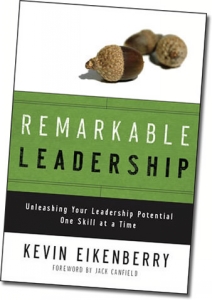
[Review] Remarkable Leadership

As I mentioned a couple of weeks ago in my post about New Year's resolutions, I've been reading Kevin Eikenberry's book, "Remarkable Leadership: Unleashing Your Leadership Potential One Skill at a Time." The book opens with the question, "Are leaders made or born?" - and Kevin provides the answer: Leaders are made.

Sure, we all know people who seem to be "born leaders" and make it look easy, but the premise of this book is that remarkable leaders learn many of the things that make them remarkable. I agree with that premise - I know people with great charisma, brilliant ideas, and other things traditionally associated with great leaders. But I've known some great leaders, and their leadership goes beyond charisma and great ideas. Remarkable leadership is about what leaders do day in, day out - and how they learn from their interactions with others.

This book feels like an "on demand mentor" for developing your skills as a leader.

What do you need?

Eikenberry provides a bunch of "modules" in this book, each focused on analyzing and developing a narrow facet of leadership. In addition to background and case studies he provides a bunch of little self-assessments to get you to think about what you really need to be a better leader. I found these assessment questions to be very focusing, and they helped me decide which chapters I needed most.

Why not just read the whole book? Sure - you can (and you probably should). But another cool thing I found in this book is a description of 3 other ways to use the book:

  1. Start with a quick read, and then decide where to focus.
  2. Browse quickly, then decide where to start.
  3. Start with the skill you are most interested in.

In the first two options, the self-assessments are excellent tools to guide your choices (for the third, I guess you could use the table of contents).

Read More

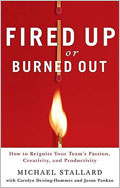
[Review] Fired Up or Burned Out

It's been a good year for good business books. I just finished Michael Stallard's Fired Up or Burned Out: How to Reignite Your Team's Passion, Creativity, and Productivity, and liked it very much.

The concepts in this book are sound, but the reason I liked it so much is that it contains a lot of stories that help illustrate how the concepts work in real life. For example, one of the concepts discussed in this book is about how to establish and maintain "Connection" in the workplace.

Great coaching

Stallard goes on to tell the story of John Wooden, a basketball coach, and how Wooden fostered a sense of family and commitment within his basketball teams (it's a great story) and went on to become one of the great basketball coaches of the game. Wooden coached some truly great players like Bill Walton and Kareem Abdul-Jabbar during their college years, and made quite an impact. For example, Abdul-Jabbar wrote of Coach Wooden:

"[He] had a profound influence on me as an athlete, but even greater influence on me as a human being. He is responsible, in part, for the person I am today."

The foundation of Wooden's philosophy was to bring together Values, Vision, and Voice and the impact was extremely powerful. He fostered Connection in everyone on the team - not just the stars, and believed in dealing with issues, challenges, fears and disagreements out in the open. I can't do the story justice here, but it's an inspiring example of connecting individuals into a powerful team.

Not-so-great coaching

Stallard follows this with the story of Howell Raines of the New York Times, who had a disastrous reign due to politics, favoritism, and inconsistent application of policies and values. He fostered Connection in the stars of the organization, but alienated everyone else.

Read More