Genuine Curiosity

Author Dwayne Melancon is always on the lookout for new things to learn. An ecclectic collection of postings on personal productivity, travel, good books, gadgets, leadership & management, and many other things.


Man, did I miss broadband...

Ahh, the joys of broadband!

Someone needs to start a service where I can write my blog posts in a letter, mail it to a dropbox, and have it post on my blog. That would've been faster than the 22.6kbps dial-up I used to post my July 4th post. Of course, there were some advantages - I didn't doo much email at all, and got to relax in balmy south Louisiana.

Stay tuned - while I didn't get any writing done, I did get some reading done and I have some great books to review for you!

Read More

Let freedom ring

I'm on vacation this week, with only dial-up access.  Therefore, my posts will be less frequent than usual (and, yes, I know that isn't all that frequent).  But here in the US, it's the 4th of July - a very patriotic day.

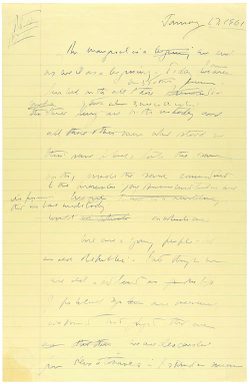
Jfkinnaug1_1 So, I'm on my snail-like connection to share an excerpt from John F. Kennedy's innaugural address years ago.  It's a message of challenge - and a message of hope.  Go read the entire address, and see if you see it's applicability to current times as clearly as I do.

Happy Independence Day, USA!

"So let us begin anew--remembering on both sides that civility is not a sign of weakness, and sincerity is always subject to proof. Let us never negotiate out of fear. But let us never fear to negotiate.

Let both sides explore what problems unite us instead of belaboring these problems which divide us.

Let both sides, for the first time, formulate serious and precise proposals for the inspection and control of arms--and bring the absolute power to destroy other nations under the absolute control of all nations.

Let both sides seek to invoke the wonders of science instead of its terrors. Together let us explore the stars, conquer the deserts, eradicate disease, tap the ocean depths, and encourage the arts and commerce.

Let both sides unite to heed in all corners of the earth the command of Isaiah--to "undo the heavy burdens [and] let the oppressed go free."

Read More

Listen to Audio Books Faster

I just sat in the middle seat on a flight from Washington, DC to Salt Lake City. I wasn't on my regular airline (an irregular one you might say), missed my connection, and am spending the night in Salt Lake City. By the way - the airline's people in the SLC airport are much more helpful and friendly than they were in Reagan National.

Anyway, I was sequestered in seat 44E (check it out on Seatguru - it's not the best seat in the house...but it's better than row 45, at least). With the guy in front of me leaning back and non-optional physical contact with the folks on either side of me it wasn't looking like a productive flight. I couldn't use my laptop, was getting a stiff neck from trying to read, and the movie is that awful Steve Martin version of the Pink Panther (I've seen it once, and that was once too many).

So, I busted out my "middle seat" collection:

  • I have lots of audio books from Audible.com on my iPod
    • Oh - and here is a tip for getting even more out of your audiobooks on your iPod (all of the models since the Mini, except the Shuffle):
      • You can change the speed of playback to "Faster" for audiobooks, and it will cut about 1/3 off the time that it takes to listen to the book. The iPod will adjust the pitch to make it sound mostly normal, too.
      • You can do this by clicking the center button a few times while the audiobook is playing and you'll see an option to set the playback to Slow, Normal, or Faster.
  • I always stash some Zone Bars for healthy snacks
  • I have a Nintendo DS Lite and some good games (my current favorites are Brain Age, Mario Kart DS, and Age of Empires)
  • I have earplugs in case I want to meditate or take a nap
  • I usually have a book and a magazine or two, so I can do something when all my electronics must be turned off

These all help pass the time on any flight, but are indispensible when you get middleated on a long flight.

What about you - any tips for passing the time in these situations?


Related:

Read More

Interesting Finds: June 24, 2006 AM edition

In the course of my work, I sit through a lot of presentations. There are some great ones (Guy Kawasaki, Steve Jobs, Brad Ames, and more). And then there are the ones where I wish I could teleport myself out of the room.

I've written about some good presentation skills/aids in the past (see Related Links, below). On the other side of the coin, here is my "don't do it" list so far.

  1. Don't put too many words on the slide. If you want me to read an article, send it to me in email. I came to hear you - and hear your stories from your heart.
  2. No animations, videos, etc. unless they are a crucial part of your story. If you are showing a video clip that helps tell your story, I can dig it. If it's a race car sound effect with a word skidding onto the screen, I don't need that. PowerPoint gimmicks are like the "Reply All" button in your email client - just because it's there doesn't mean you have to use it.
  3. No jokes about getting the time slot after lunch, and how everyone is going to nod off. That's just not funny because everyone says it. Just tell me a story about something, or a good clean joke.
  4. No reading the slides verbatim. Again, I'm here to hear you and your stories. You can use the main points to jog your memory, but tell me something I don't see on the slide (this is even worse when you combine it with #1 and you read a bunch of words to me).
  5. Face me, not the screen. When you face me, I feel a connection and your voice projects toward me. When you face away, I lose the connection. More so if I can't hear you.
  6. Don't use a font that's too small to read from the back of the room. I get the cheap seats sometimes but I still want to see your slides from way back there.
  7. Don't use a text and background color combination with low contrast. Dark blue on black (yes, I saw that recently) doesn't cut it from anywhere in the room.
  8. Avoid busy / heavy background graphics. Text gets lost on a busy background.
  9. Don't talk too fast, and don't mumble. I think this one speaksforitselforatleastitshould.
  10. Don't "wing it." Know your topic, know your slides, and know your key points. It's important enough for me to be here, so don't treat it like improv. Rehearse before you show up.

Not comfortable presenting?

Some ways to improve include:


Related links:

Read More

We can tackle the Big with a lot of Small

OK, let me start by saying I'm not trying to bring everybody down with this topic. That said, today I heard a thought-provoking discussion around Gartner's Research advisory, "G00136943: Prepare Now for a Coming Avian Flu Pandemic" (this is a free research note, and Gartner is planning a series of such advisories go to the Gartner web site and search for "pandemic" to find them, along with more detailed for-fee research).

The core warning of the note is that companies should look beyond their current, traditional disaster recovery / business continuity plans, and start developing pandemic response plans. And, we should all be doing this now. Excellent (if disconcerting) advice. Why?

We have not yet experienced a pandemic in the high tech era

Yes, we have disasters all the time - hurricanes, tsunamis, floods, fires, earthquakes, etc. These kinds of disasters only affect a localized geographic area. Even the devastating disasters like huge tsunami of 2004, the earthquakes in 2005, and Hurricane Katrina caused localized sorts of problems. They also tend to have short-lived periods of destruction (i.e. the part that causes damage goes away pretty quickly). All of this means that surrounding global communities who are not affected are able to mobilize fairly quickly and begin providing aid.

In contrast, a "pandemic," (a global epidemic) will affect a large portion of the world in a very short period of time, and could continue for weeks or months. The Gartner note cites a U.S. Congressional Budget Office (CBO) report projecting the likely effect that a pandemic of the avian influenza virus H5N1 would have on the U.S. economy, if it were to begin spreading to humans:

Read More