Genuine Curiosity

Author Dwayne Melancon is always on the lookout for new things to learn. An ecclectic collection of postings on personal productivity, travel, good books, gadgets, leadership & management, and many other things.


What's Most Important for Focus?

For the past month, I’ve been working with Jason Womack  as part of a group coaching program based on this book, “Your Best Just Got Better” (you may recall I reviewed his book last month).  The program, called “Achieve Your Next” is all about clarity, focus, and outcome-oriented thinking.  I have really enjoyed the program, as well as the group approach Jason has taken.  

675_3368613.JPG

What are your MIT’s?

One key takeaway has been to move away from focusing only on tasks, projects – and even goals – and spending some of your time focusing on your roles and areas of responsibility.  Jason refers to these as MIT’s or “Most Important Things.”

For the past week, Jason has asked me to pick 3 MIT’s I want to focus on each morning, and try to deliberately engage in activities that help me improve in those areas.  Incidentally, this approach is also described in the book.

Earlier in the program, we began to achieve clarity about what our MIT’s were, so I already know what mine are (at least right now).

MIT’s drive focus

MIT’s can be things like “Thought Leader,” “Provider,” “Leader,” “Amazing Parent,”  or they can be even more tangible.  For example, Jason’s MIT’s for his business are Lifestyle, Revenue, Client List, and Products.

As you can see, however you define your MIT’s, they provide a lens to evaluate your tasks, commitments, projects, meeting, actions, and more – and to make sure you get what you want out of life.

If you're overwhelmed by stuff you could  do, maybe focusing on your MIT's will help with prioritization.  If you want to give it a try, check out Jason't book.

Colossal Public Speaking

I've just finished reading James Greenward's ebook, "Colossal Public Speaking: A Public Speaking Guide for Shy People," and I enjoyed it so I wanted to tell you a bit about it.

3dpsecover.jpg

This book is not really about how to create a presentation (though there are some pointers for how to structure your story); instead, it focuses more on how to prepare yourself -- both mentally and physically -- to maximize your chances of delivering a compelling message, while overcoming fear, anxiety, and doubt.

Advice from someone who's been there

Greenward's guide is a "from the trenches" perspective on how to overcome some of the challenges of public speaking and presenting, particularly the aspects in which we tend to become our own worst enemies.

In this ebook, you'll find practical advice for how to become more comfortable in front of crowds, and tips and tricks to get some practice in before you actually stand up in front of the crowd.  I use a few of the techniques he describes (for example, "presenting" to myself during my commute), but I also learned a few new techniques from the book that I'm going to try.

One of the sections discusses how to get rid of stage fright (there's no silver bullet, but the tips he shares will help), and how to leverage your own personality and create a higher-impact presentation.  He also talks about how to get rid of things might be distracting, both in your voice and in your appearance - there is some good advice here, for sure.

More than just the presentation

One thing in this book was a bit different from other presentation books I've read:   Greenward's treatment of the Q&A session and how to prepare for success.  In particular, he discusses how to deal with adversarial audience members and how to deal with uncomfortable (and even unfair) questions.

If you consider yourself to be a shy or inexperienced public speaker, have a look at Greenward's site, where you'll find out more about this ebook as well as an ordering page.

Five Great Books on Motivation and Success

When you look at people who are successful and happy, do you ever wonder, "What's their secret? Why do they get to have it all?”

The secret is simple: There is no secret. Most people we classify as successful will tell you there is no magic formula or golden ticket that has led them down the path to prosperity. To a large degree, it comes down to careful planning, smart choices and a great attitude.

Timeless lessons

books success.png

If you browse the "books" category of my site, you'll notice that I review a lot of current (or at least recent) books on management, leadership, self-improvement, etc.  This week, I though it would be fun to jump into the "wayback machine" and take a look at some of the best self-improvement books from the past.  

There are plenty of well-known figures who have shared their strategies and tips for success, and we can increase our odds of success by reading and reflecting on their books. Famous motivational speakers like Tony Robbins, religious leaders like Joel Osteen and Ed Young and scholarly experts like David Schwartz have written books offering motivation, inspiration and sound advice to help anyone prosper.

The list of successful professionals who can offer significant insight into being successful and happy isn't limited to modern-day writers. If you're looking to change the trajectory of your life with regards to business, family, romantic relationships or spirituality, check out the advice from some of these gurus (by they way - each of the book titles below is a live link to the book on Amazon):

"Awaken the Giant Within" by Tony Robbins

You may have heard of Tony Robbins, or seen one of his infomercials on TV. In this book, he takes on mental, physical, emotional and financial health and gives us a lot to think about. Robbins is famous for laying out step-by-step plans to improve yourself, and this book is no different - the techniques are very good and practical.  This book is 30 years old, but I think it stands the test of time, and so does Robbins.  Now in his 50's, he has reached over 50 million people over his 30-year speaking career - that's about a million people per year of his life.  Not too shabby.

"In the Zone" by Ed Young

Ed Young shares biblical principles about what it means to live a productive and rewarding life. Young is the founding pastor of Fellowship Church in Grapevine, Texas, and shares how and why we should avoid materialism, to increase the amount of hope and joy in our lives. "In the Zone" also gives actionable advice on escaping debt, achieving financial freedom and managing the resources we've been given.

"Rich Dad, Poor Dad" by Robert Kiyosaki

Robert Kiyosaki's well-known personal finance book discusses money from the perspective of two fathers. The poor/middle class dad works for his money, bringing home paychecks to sustain his family. The rich dad's money works for him. Kiyosaki discusses the philosophies that allowed him to retire at 47 and reveals actions you can take now to reach financial security and freedom.  There are a bunch of interesting financial habits in this book, and you'll benefit even if you only apply a few of them.  Good stuff.

"The Power of Positive Thinking" by Norman Vincent Peale

Norman Vincent Peale's inspirational classic has been translated into 12 languages and reprinted for a global audience. First published in 1952, this book outlines how to achieve popularity, overcome defeat, develop confidence and more. Peale believes a life rooted in joyful faith and a positive outlook can lead to these and he gives specific examples of how simple changes in your mental attitude can improve your life.

"How To Win Friends and Influence People" by Dale Carnegie

This one is a classic, for sure.  Since it was first published back in 1936, Dale Carnegie's legendary motivational book has sold more than 15 million copies. At the heart of the book is a reassuring assertion: that communication, not brilliant insight, is what leads to success. Carnegie describes how readers can get the job they want and improve the job they have. As one of the books that pioneered modern self-improvement books, this is a must-read.

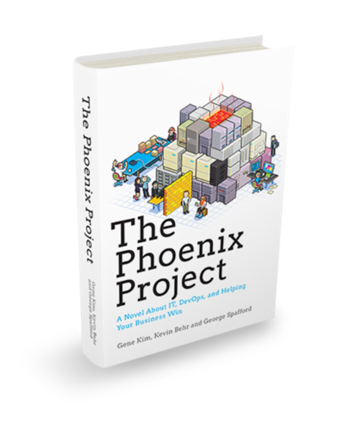
[Review] The Phoenix Project: A Novel About IT, DevOps, and Helping Your Business Win

[Updated January 15, 2013 to include link to longer excerpt - 170 pages, using the link at the end of this post.]

Last week, I read the newly released book, "The Phoenix Project: A Novel About IT, DevOps, and Helping Your Business Win."  This book was written by Gene Kim, Kevin Behr, and George Spafford, who also wrote "The Visible Ops Handbook" (I was a contributing researcher on that project). 

The Phoenix Project is a business novel that takes you through a few months in the life of Bill Palmer, an IT manager at a large auto parts manufacturing company. The book begins with Bill's boss (head of IT Ops) and his boss's boss (the CIO) getting fired.  Bill gets a battlefield promotion and works directly with the CEO, who expects him to solve some serious IT problems (that threaten to destroy the business) in 90 days.

"The Goal" for Information Technology

Don't let the fact that this is a novel fool you - this is not fluff, and there is plenty of rich learning in this book.  If you've ever read "The Goal," by Dr. Eliyahu Goldrattl, you'll know that it was a business novel designed to make it easier to understand his "Theory of Constraints" (TOC) model and it succeeded in making a lot of very complex concepts approachable for business seeking to improve the performance of their manufacturing and supply chain operations.

The Phoenix Project is a lot like The Goal, in that it wraps a compelling story around such complex topics of DevOps, ITIL, Agile development processes, risk management, top-down risk-based audit scoping, and a lot more.

A captivating read, with realistic scenarios

As the story unfolds, you not only learn about these topics, you also see them in situations that you'll recognize.  I ran across quite a few scenarios that felt familiar both from my day job, as well as the work I do with enterprises and executives around the world.  In other words, the situations in the book are very real business scenarios.

The characters remind me of people I know, as well.  I had mental images of the characters as people I've worked with and you probably will, too.  After all, the stereotypical IT security curmudgeon is not just a story - and you may be surprised what happens to the head of Information Security in this book.

I read this book on the plane the other day and found myself irritated when I had to shut down my e-reader for landing because I couldn't wait to see what happened next!  I can almost see this becoming a movie at some point (though the idea of an IT-oriented feature film is probably a bit of a stretch - maybe there could be a car chase or an alien invasion or something).

Learn to improve your business

As entertaining as this book is, there is a lot to be learned from it.  In today's business world, IT is involved in almost everything we do. One of the challenges faced by many IT professionals is that the non-technical parts of the business often don't understand the linkages between IT activities and business success.  The result is IT getting the short end of the stick and starving for resources.

IT contributes to these problems, as well, because they spend a lot of time on activities that aren't "make or break" for the business so they have a hard time demonstrating value created with the budget they've been given.

The Phoenix Project hits this problem straight on and presents ways to get everyone on the same page about what's really important to the business, provides tools for IT professionals to focus on delivering meaningful results for the business, and tying all of it directly to how the business makes money by satisfying customer needs.

A must-read for IT professionals and business people alike

The principles shared in this book are critical for any business that relies on IT for its livelihood.  I recommend The Phoenix Project to every business person and IT professional that wants to increase their business performance.

If you want to see what it's like, click this link to read a brief excerpt from The Phoenix Project.


How To Stop Ruining Your Own Life

While preparing your goals for the coming year, have you reviewed what you did last year? Were you happy with the results? If the answer is no, maybe some further introspection is required - and I have a few simple questions you can use to get right to the point.

changemind2.png

What have you done?

A long time ago, a mentor of mine used to tell me:

“Pretend that you create everything that happens to you. When you you find yourself in a situation that you're not happy with, ask yourself, 'What have I done to create the situation for myself?'  
"In most cases, you'll find something that you did - or failed to do - that brought you to this point."

I've used this technique many times on my own, and I love it.  This method forces you to turn the tables on yourself and look at things in a different light.

Once you identify what you've done to create your own bad situation, then ask yourself:

"What can I do in the future to create different outcomes that are more desirable?"

As you come up with possible solutions you want to try out, write them down and resolve to try altering your behaviors in the future.  Then, monitor yourself to see how these changes impact the outcomes.

A personal example

I used to work with someone that dumped half-finished projects in my lap and expected me to save the day by getting them done.  Because I wanted the company to be successful, I'd take them on and finish the projects, they would take credit for the results, and I'd end up really irritated.  But I kept doing it anyway (I know, shame on me).

During one of my reflection exercises, I became consciously aware of what I'd been doing.  I vowed never to make another "diving catch" to do something for this person that they should have done for themselves.  To make this easier, I came up with several useful strategies to say no gracefully and I put my new plan into practice.

A few months later, I was much happier, and this person's poor performance became noticeable enough for our boss to address it as a performance issue.

In other words, this really works (at least for me).  Let me know how it goes for you.