Genuine Curiosity

Author Dwayne Melancon is always on the lookout for new things to learn. An ecclectic collection of postings on personal productivity, travel, good books, gadgets, leadership & management, and many other things.


Now, type with your hands

Today on Talking Story, I'm a guest author with a post on learning - thanks to Rosa Say's focus on learning this month. In the post, I talk about why I'm glad I was required to take a typing class in high school. The post is more about learning than specifically about typing, but I've gotten a couple of comments (on and off the blog) about people who wish they'd taken typing (or paid more attention in typing class).

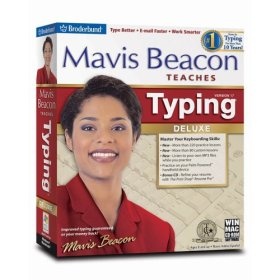
If you are not happy with your current typing skills, all is not lost. I highly recommend the Mavis Beacon Teaches Typing as a means to rapidly improve your typing skills. This is a very well done, interactive teaching session that adapts its lessons based on your initial typing ability and progress as you use the product.

You start with a test to establish a baseline and guide you to the appropriate starting point. At each step of the way there is a nice mix of instruction, practice, and testing. And, you can do it in nice little chunks, as required for your schedule. I got it a couple of years ago, at the advice of David Allen, and improved my accuracy while improving my typing speed by about 25%.

Or, you could always use the speech-to-text product I mentioned in my last post. But I still think typing is a foundational skill in today's environment.

If you try out (or have tried) "Mavis Beacon Teaches Typing", I'd love to hear how you like it.


Related posts:

Read More

Fresh Gear: Type with your mouth

A few months ago, I purchased a copy of Dragon NaturallySpeaking. If you're not familiar with it, Dragon is a software product that allows you to talk to your computer, then types what you say.

When I began considering NaturallySpeaking, I needed to create a talk track for some PowerPoint slides. I found that when I sat down to type speaker notes something was lost from the way that I normally presented the material. To help make my speaker notes more conversational, I picked up a copy of NaturallySpeaking.

At first, I was a little skeptical, thinking, "Is this thing really going to work? After all I used to have a Newton and it never recognized my handwriting?" Nonetheless, I decided to give it a try.

I must say, I have been very pleased with the results. I haven't used the product that often, but there are certain circumstances in which I feel typing stifles my creative flow. In those situations (usually involving presentations) I fire up NaturallySpeaking, and start talking. And, I find I'm beginning to use it more often.

When you first install the product, you calibrate your headset microphone (one is included, but I've purchased a Logitech one that is smaller for travel, which I also use with Skype). You then go through a brief training session in which to read some sample text so the program can get used to hearing you speak. It then creates a user specific profile so that they can learn from you and get better or recognizing your speech over time. Even during the initial usage period, I've found NaturallySpeaking to be very accurate, and it gets better over time.

Now I can type pretty quickly, but I find I can produce a heck of a lot more text with NaturallySpeaking than I can in the same period of time typing of course, more is not always better, but I can't help think how much easier it would have been to write those papers in high school if I'd had NaturallySpeaking.

After a couple of sessions of using the product, you get used to saying punctuation words like "comma" and "new paragraph" as you speak, and it becomes very easy to remember all of the editing commands and other tools that are built in to NaturallySpeaking. By using the product's interface to perform the corrections, you help it improve its accuracy over time.

So, if you are a frustrated, hunt and peck typist (or you just want to let your hair down and start talking to let your muse flow) you might want to take a look at Dragon NaturallySpeaking.

By the way, this whole post was written in about eight minutes using NaturallySpeaking. And the only manual editing I did was the insertion of the hyperlinks and the image. I'm sure there's a way to do that with a NaturallySpeaking, but I have only really started using the product in the last couple of weeks and there are a whole host of commands I haven't even tried to figure out yet.

Read More

Playing to Your Strengths

I had my annual performance review with my company's CEO last Friday. On Tuesday, I received a copy of the "review" to prepare for the meeting.

Our CEO's style is direct and open, and that style carried through to my review. My review was about a page and a half, summarizing major accomplishments from the last year, a few paragraphs summarizing some of the "360 feedback" he'd asked for from folks I worked with (mostly positive), and a couple of lines about an area where I can improve. And, there were no surprises in the review.

When we got started in the discussion, his conversation mapped pretty closely to those proportions: lots of time spent on accomplishments and positive feedback, but only a few minutes on things that didn't go so well.

I mentioned that I'd like to spend some more time talking about the areas where I'd had challenges or failures during the past year, so I could learn from them.

His reply really struck me. Here's what he said:

"Sure, we can discuss what you've learned from those challenges, but I don't want to spend too much time on that.

"One of the things I've learned in my career is that we all have areas of strength and areas of weakness. A 10% improvement in a strength can make a huge difference; a 10% improvement in an area of weakness probably won't have nearly as much of an impact.

"Let's focus on how to make the most of your strengths and make them even stronger."

I think this is good food for thought for anyone. When I think about the times I felt really proud of my results, it was when I was using my strengths.

You only have so much time and energy. Where will you invest your 10%? Always strive to make choices that put you in situations where your strengths can make a real difference.


Related posts:

Read More

When are you at your best?

As you may know from my writing here, I am something of an explorer - always looking for new things, new data, new connections, and new meanings in the world around me. Part of my energy is spent on self-examination. I'd like to share a few of my experiences here in hopes they may help you, should you find yourself in a similar "questing" state of mind.

Introspection is good

A while back, I wrote about Dick Richards' wonderful book, "Is Your Genius At Work?" and described how I was trying to home in on what my genius is, but still hadn't nailed it. Well, I still can't name it but the process heas helped me on my journey. This book has some powerful exercises to guide the curious soul.

In addition to Dick's book, I've found some strong insights through spending time with Phil Gerbyshak's book, "10 Ways to Make It Great!" (also reviewed recently). In Phil's book, there is a strong, focusing thread of, "What is it that you want to be known for, and what can you do every day to increase the odds that it'll come true?"

Seek others' input

It's easy to navel-gaze forever, but I'm also finding tremendously fertile ground in conversations I've been having with my friends and coworkers. At the recommendation of a mentor of mine I've been interviewing people I work with and asking them four simple questions, developed with help from my office mate Gene. The questions are simple and humbling (the parentheses represent what I usually say when people ask, "What do you mean by that question"):

  1. In your opinion, what am I good at?
    • (What activities are the best fit for my skills, as you see them?)
  2. What am I not good at?
    • (What activities are not a good fit for my skills, or seem particularly challenging to me, from your perspective)
  3. What is the highest value I provide to you or the organization?
    • (If I stopped working here, what would be the hardest thing to do without or replace?)
  4. How could I double or triple my value to you or the organization?

Obviously, I picked people I trust (to be honest, to keep my best interest in mind, etc.) but it's still difficult to have these conversations with people you admire or respect. Trust me - it's worth it to power through the anxiety.

One thing that can be challenging is to simply listen during these sessions. Fight your impulse to dispute what you hear, or play it down, or even lead your interviewee down a different path. Try to limit your commentary responses to, "Thank you," or, "I didn't realize that," and make liberal use of phrases like, "Tell me more...," and, "What do you mean by that?"

More perspectives lead to more clarity

My conversations validated a lot of my own perceptions about what I'm good at, and what I'm not good at. But I heard some things I never realized I even did, so I certainly never considered them to be strengths. And I found that increasing my value to others was generally not about doing more things (my tendency) - it was more about doing more of a few things. This is helping me cut out things that don't add tangible value to myself or others, which is a very good thing.

If you try this out, let me know how it works for you.

By the way - if you can't find enough people you trust to have these kinds of conversations, that's something to think about. I can think of times in the past when that's been true for me, and I'm glad that's not the case any more - that's no way to live.


Related posts:

Read More

Get Focused

Dave Cheong has a great write up in his latest post, 18 Ways to Stay Focused at Work. He's created a nice blend of how to deal with physical and virtual distractions in the workplace.

The one I have trouble with is the first one, write out a daily task list and plan your day. To be more precise, my problem is sticking to the task list. The downside of my curiosity is my ability to quickly become enamored by a new idea, concept, fun project, etc.

Do you have this "distracted by shiny objects" tendency, too? If so, I'd love to hear your secrets for dealing with this challenge.


Related posts:

Read More